

Alex Honnold's Live Netflix Climb and The Future of Entertainment
If AI can someday replace actors in movies and TV will a demand emerge for "real" human stakes witnessed live? This weekend's climbing spectacle may be a warning sign of what's to come...

If you’ve had the chance to watch Alex Honnold’s documentary Free Solo, you understand how much of a marvel and an athletic outlier the accomplished climber is (and for better or worse—considering the risk of these feats and the toll on his family). But if you also caught his live skyscraper climb on Netflix you might have come away with mixed feelings about what you saw.
Scaling El Capitan in Yosemite National Park without a rope could have ended very badly but we know it’s okay even before pressing play. Could it encourage dangerous copycat climbs? Sure. But not likely just because one might get a documentary made about the effort.
From National Geographic to Netflix
It would be hard to argue that the spectacle on Netflix this past Saturday was the “same” as the documentary. Because it wasn’t. Alex climbed Taipei 101 for a live audience (and was paid to do it; although according to the climber not nearly enough).
The 101-story skyscraper was the world’s tallest building from its opening in 2004 until the opening of the UAE’s Burj Khalifa in 2009. The building is an architectural marvel, full of diverse exterior features and the kind of nooks and crannies that make a televised free climb exhilarating TV.
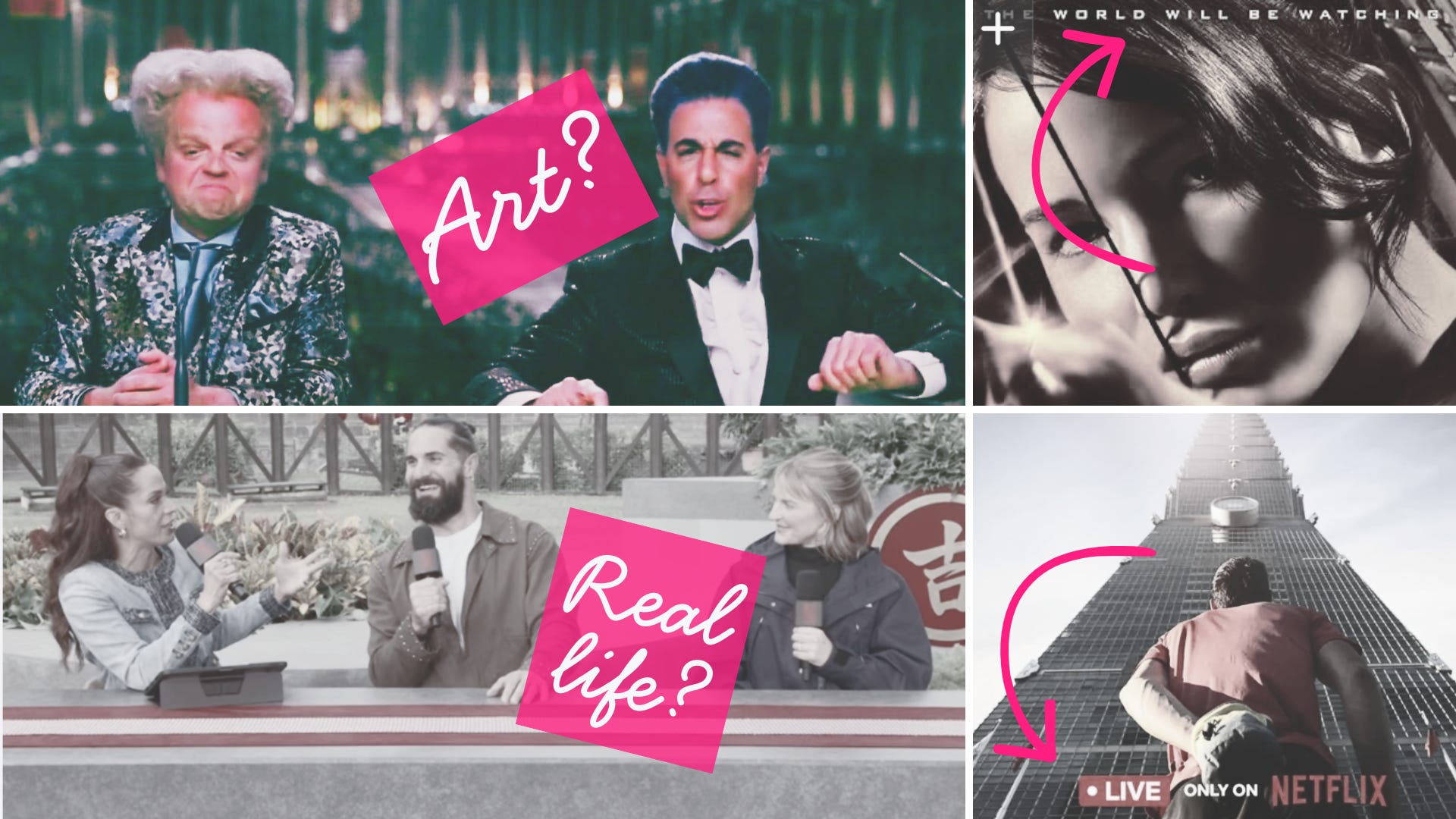
It was also deeply unsettling. I couldn’t help but feel that we were watching the Hunger Games. The setup of Alex’s climb felt eerily familiar with the same fanfare, chipper commentary, and the “someone might die today” subtext.
Of course, in the Hunger Games the game is about the majority of players not surviving. But considering the fact that Alex could have fallen during the live telecast, wasn’t that also part of the appeal?
Is This What We Want?
Although there isn’t yet a compelling AI-generated movie or TV show capturing our attention, it’s coming. And it may shift how we feel about entertainment forever.
For instance, we’ll see the business of background actors falling away. Having spent a couple of years accompanying my daughter on set as an extra, it makes perfect sense. It’s a lot of work to usher groups of people around who are merely glimpsed in the background. There is a ton of paperwork, transportation, catering, and herding from set to craft services. Why bother if a filmmaker can just generate them using AI?
And while entertainment will still require human artistry and talent, it may remove familiar faces from our screens, leaving us with a void that we can’t explain.
When “Connecting” With Our Humanity Means a Thirst for the Ultimate Risk
So what comes next? Do we start to invite life or death feats into our homes as entertainment? Are we so bored by art that is helmed by an unknown AI-generated face that we look for the thrill that comes of seeing “real” humans in dire circumstances?
I worked for Netflix two decades ago and they were always a company that could see many years into the future. And it’s in that context that I feel even more unsettled. They may actually see what’s ahead.
While the imaginative Hunger Games or even the very real Roman Gladiator events in history seem extreme in comparison, the thirst feels the same. The commentators chatting chirpily with Alex and his loved ones through the two-hour show made it even more unsettling. Every time they talked about “Alex making it,” they meant either stopping (best case) or, more realistically, falling and dying.
So What Comes Next?
In addition to being forward-thinking, Netflix is also a shrewd company and they would have made sure that the odds of Alex falling were slim. While that may give us some assurances, it doesn’t make the situation any better. At the end of the day, all they could do is be flexible about shifting the time (it was delayed by a day because of the weather) and institute a 10-second delay (in case he falls so it’s not televised).
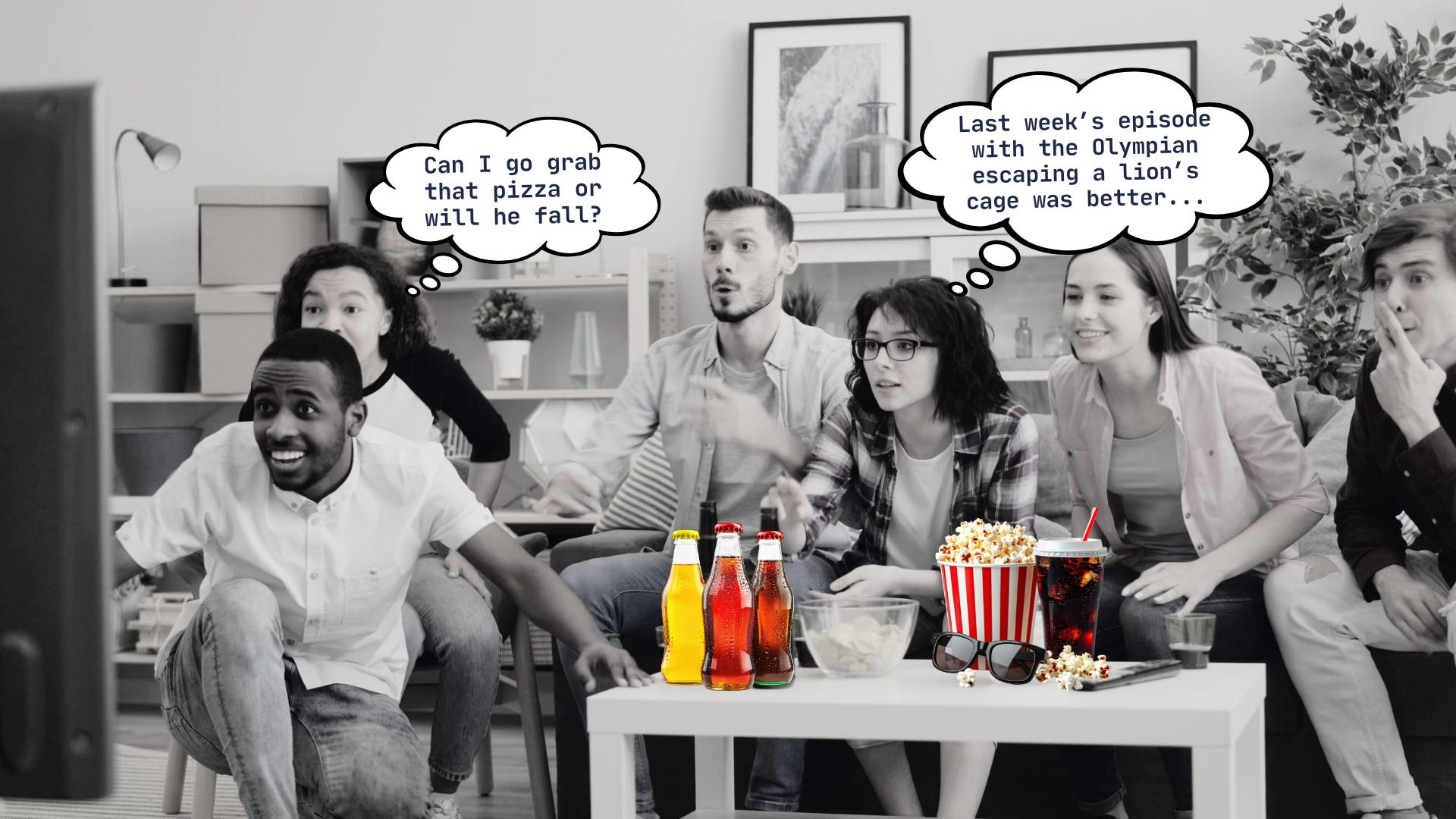
Very few media outlets have ventured into the moral discussion in covering the story. They likened it to other “live events” on Netflix, or talked about Alex’s past feats and his ability to determine the feasibility of any climb. But make no mistake: he could have died on live TV. And he was paid to take that risk, and we were lured to watch on that basis.
A few writers have been bold enough to say this quite part out loud:
“Live” isn’t about authenticity; it’s about monetizing the possibility of the worst outcome, packaged around the one person the world trusts to get away with it. It’s rubbernecking with a subscription login. —Seiji Ishii, Gear Junkie, Jan 22, 2026
I watched the climb, and discussed my concerns with my family. What I’m worried about is not that it happened; I’m worried that viewers wanted to see it. I’m worried that we will start to justify this type of content (e.g., “it’s his decision”) and like Seiji Ishii writes, we’ll allow for it to become commoditized.
As I’ve started to write about human “outliers” who represent those qualities we need to hold tight to, and whose stories we can’t lose sight of, Alex’s case shows how we can exploit their specialness too. We should embrace the stories of outliers, not use them to feed our desire to keep connected to the worst ways we are human.