

Meet the Female Founder Tackling Household Management With AI
Laura Cunningham knows the uncomfortable load of managing a household firsthand—and its impact on families. That's why she built AVA for those wanting less admin and more time with their kids...

It’s hard to have meaningful conversations about AI if we aren’t actually using the technology. And to be fair, it’s incumbent upon entrepreneurs to actually develop products that make us want and need AI in our lives. This is part of the problem right now, particularly for women: we aren’t seeing the utility of innovation in real time because AI is not being built for us.
So I was delighted to meet an entrepreneur putting an AI stake in the ground and offering up innovation that gets at a core challenge facing families: the “mental load” of parenting, and specifically of motherhood.
Introducing AVA
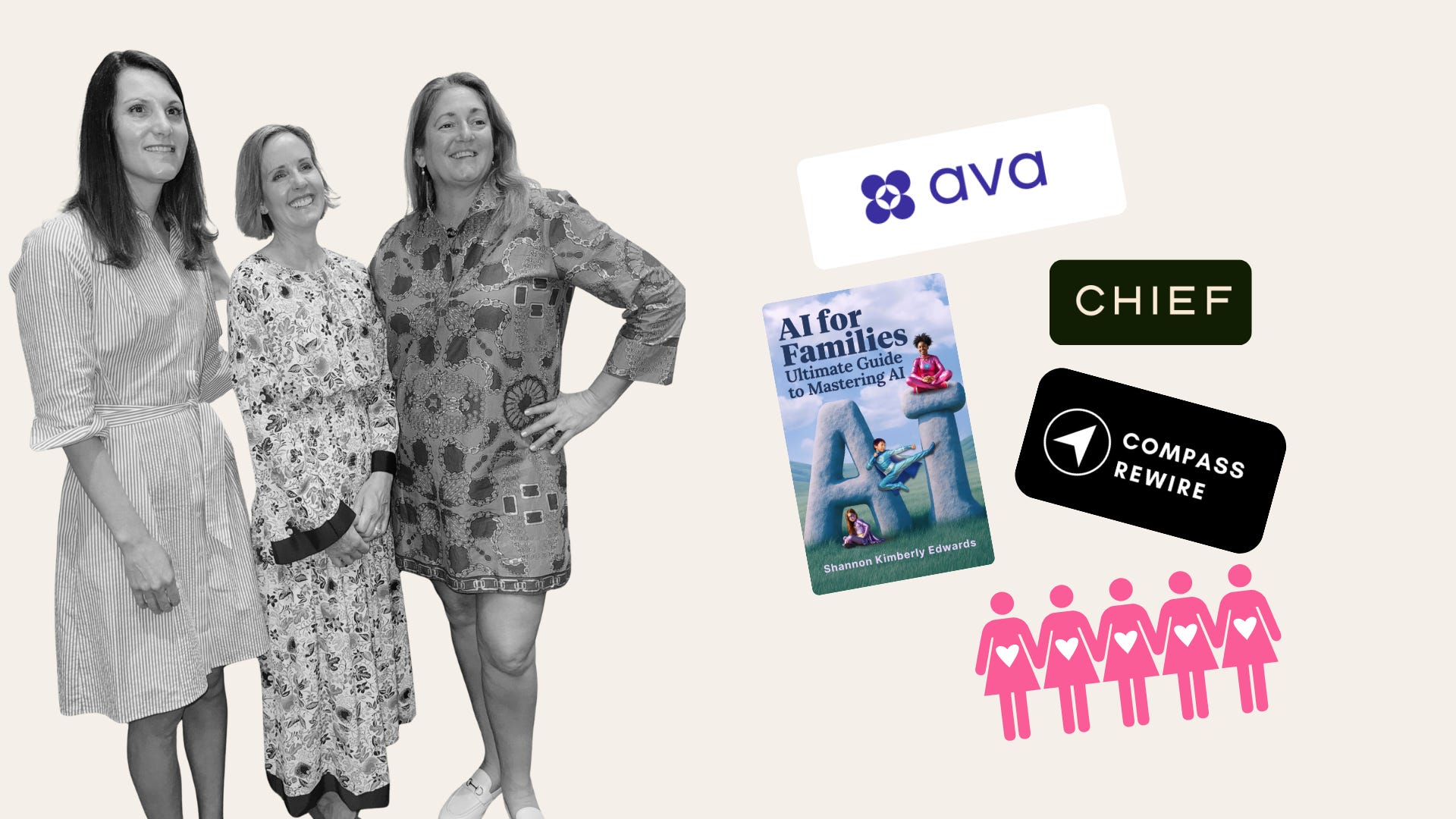
This week I had the pleasure of participating in an event for women hosted by Chief, moderated by Samantha Mulcahy, and alongside fellow panel guest Laura Cunningham, founder of a new app called AVA. What Laura and I share is a passion for digital literacy and personal empowerment, and after two hours talking with a room full of engaged women, it was clear we’re on the right track in giving them what they need to understand and embrace this new technology.
We are all living in this moment where AI can allow women to move ahead with ideas, projects, and initiatives like never before—but many of us aren’t embracing the potential. So not only is AVA a game-changer for busy parents, it’s an example of the ways in which AI can supercharge female entrepreneurship—and that’s something worth paying attention to.
I had a chance to speak with Laura in more detail recently, and here is what I learned about this thoughtful business leader and her new project AVA.
Entrepreneur Laura Cunningham
AIF: Tell me more about your background and what brought you to this moment?
LC: I’ve spent more than fifteen years as a product leader, almost all of it at the intersection of technology and human systems that are supposed to serve people but usually aren’t built for them.
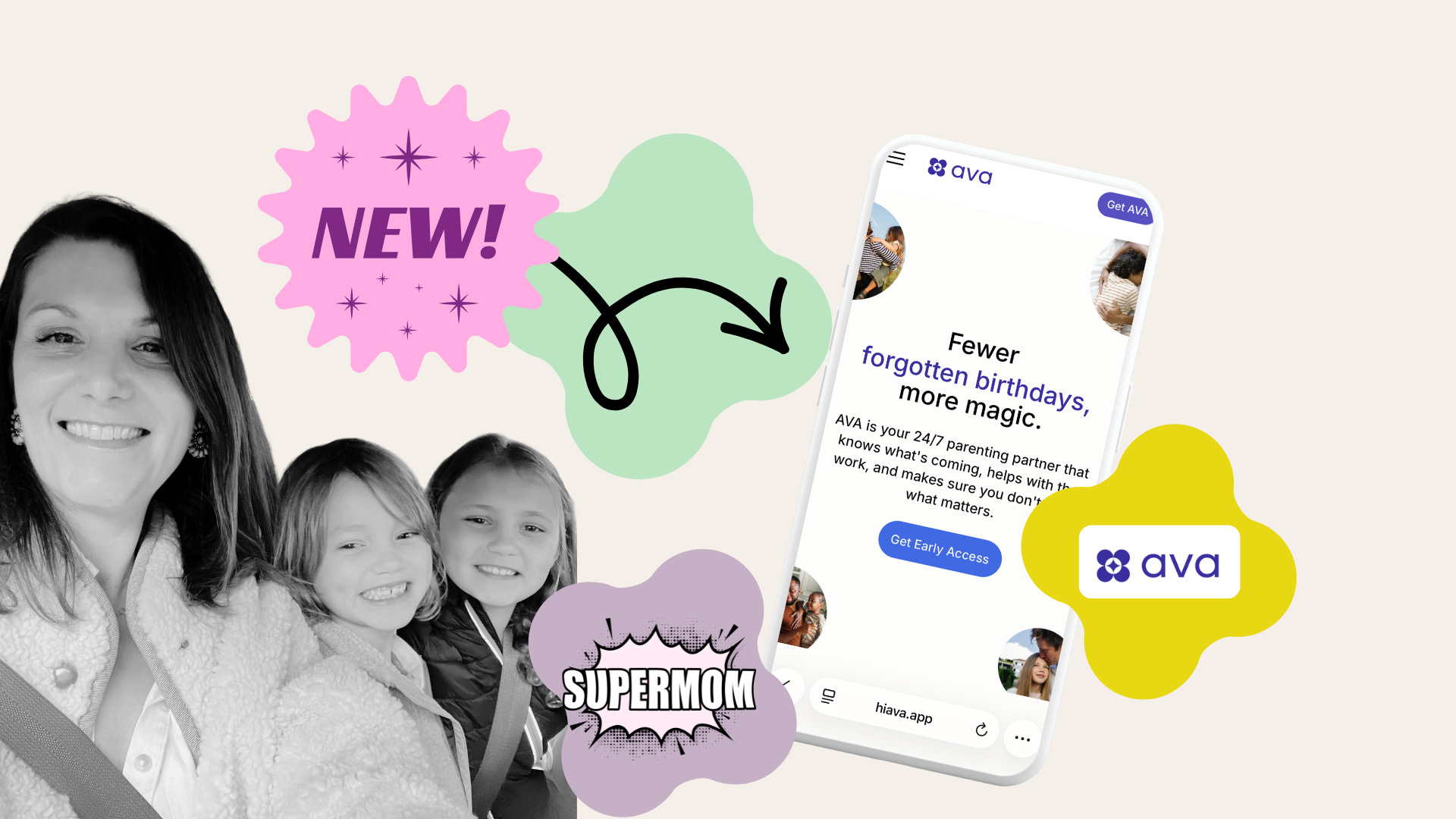
I started in public education. I worked inside the New York City Department of Education, in what was then Mayor Bloomberg’s Office of Innovation, using technology to help teachers and administrators understand what kids were learning in an ongoing way. From there I went to KIPP, the national charter school network, and then spent years in ed-tech startups, both early and later stage, building products for teachers, students and their families. Most recently, before AVA, I led AI product strategy at NEAR, a layer-1 blockchain and deep-tech company.
So my through line isn’t education or crypto or AI, exactly. I keep ending up in places where the technology is powerful and the humans it’s meant to serve are an afterthought. I’ve spent my career trying to close that gap. AVA is the most personal version of that work I’ve ever done, because this time the human being the system forgot about was me.
AIF: What has motherhood changed about your thoughts / experience of work?
LC: A few things...
The first is efficiency. I became a radically better worker after I had my daughters because my hours got much more finite. I know when my workday starts and when it ends, and I hold the hours with my family as non-negotiable. We eat dinner together almost every night, as a matter of principle. In order to make this work, I’ve had to increase my focus on work that leads to outcomes instead of the kind that looks pretty in a deck. I’ve had to get ruthless about what actually matters and I think that constraint has made me sharper.
The second is mission. I’ve always been mission-driven, sometimes to a fault. But becoming a mother took that from an intellectual commitment to something closer to a physical one. I want to contribute to the world in a way my kids will one day understand. I want my daughters to see me leading. I want them to grow up with a model of a woman who can build something real and still be fully a woman and fully a mother, not as a balancing act but as one whole life.
The third is that motherhood kind of cured me of the optimization story. For years I chased “balance,” which is a lie we sell women, the idea that if you just distribute yourself correctly across every demand, you win. You don’t. You just get very good at being partial everywhere. What I want now is something more like self-actualization. Becoming more fully the person I’m capable of being, in all of it, instead of managing myself into smaller and smaller pieces. That shift is honestly a big part of why AVA exists.
AIF: What is AVA?
LC: AVA is a company focused on reducing the mental load of parenthood (usually, statistically, motherhood) which leads to both mental health issues as well as workforce attrition. AVA is both a product—an app that uses agentic AI to proactively handle family admin and coordination work—and a community of parents who are advocating for better support systems in the US.
AIF: Tell me more about how it works?
LC: Every modern household runs on an enormous amount of invisible executive-function labor. The remembering, the anticipating, the coordinating, the deciding. Roughly fifteen hours a week of it, and it falls disproportionately on one person, usually the mother. We have a name for it now, the mental load, but naming it hasn’t moved it. Most families are running this on sheer vigilance, group chats, and hope.
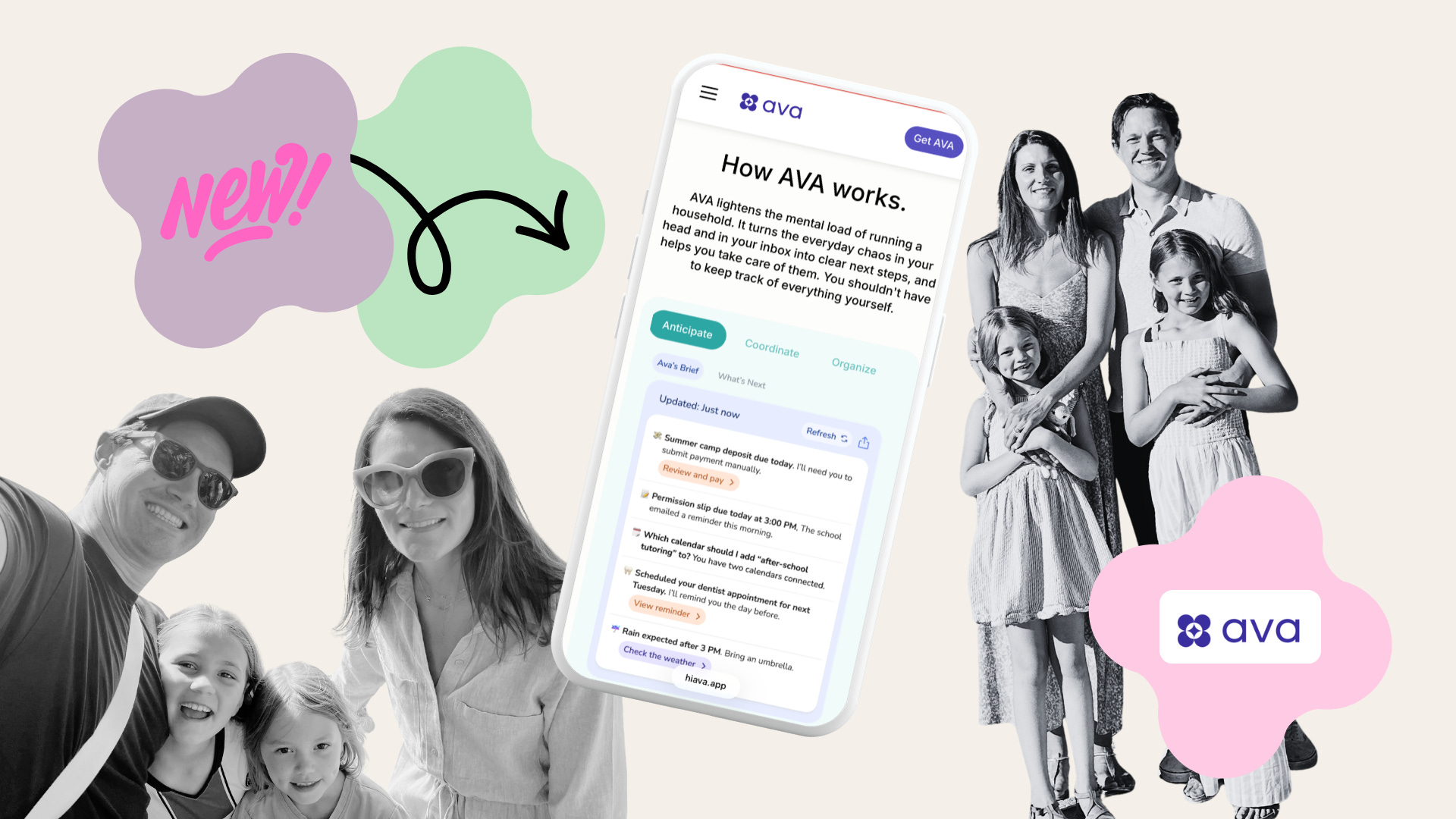
AVA the app is an ambient AI layer built to help you carry that load. It helps you anticipate what needs to happen, find the best solutions for your specific family, and makes sure things get done.
The belief underneath the whole company is simple: care is infrastructure. We’ve spent a century treating the work of running a family as a personal talent or a personal failing, when it’s actually infrastructure that a household needs and that no one ever built. AVA is my attempt to build it.
AIF: Do you think women are hesitant to embrace AI?
LC: I think the reality is, as usual, more nuanced than it might first seem.
Starting with a fact that surprises people: parents (ahem, moms) are among the heaviest AI users in the country right now. Surveys have found around 79% of parents using AI versus about 54% of non-parents. Mothers are using it for caregiving logistics, for the mental-load work that has no other tool, for scripts to have a hard conversation with a partner. So the “women won’t touch it” narrative is not totally true.
What is real is that women are being punished for using it in ways men are not. There’s research showing that when identical work is labeled as AI-assisted, it’s rated as less competent, and the penalty is more than double for women. Women are far more likely to hide their AI use at work. Men are significantly more likely to be encouraged by their managers to use it, and more likely to be praised when they do. So I think many women are having a rational response to a real, measurable tax that we pay and men don’t.
And I think into this moment, our culture is handing women a set of scripts about how to personally deal with all this, and I think every one of them is a trap. Use AI to frantically keep up, which is just the girlboss optimization story in a new logo, making each woman individually responsible for a structural shift she didn’t design. Or refuse it as principled resistance, which sounds noble but falls hardest on exactly the women whose jobs are most exposed.
Women are something like 83% of workers in the most AI-exposed occupations. For a woman in that position, refusing the tool her whole industry is adopting is more like unilateral disarmament. Or the two quieter scripts: use it but hide it, or use it and apologize for it. All four ask us to manage our own complicity instead of changing who gets to shape what comes next.
My belief is that we need to use it, see it, and shape it. Use it, because the leverage is real (it truly makes me feel so powerful!). See it, meaning refuse to hide our use, because the penalty exists precisely because women’s work keeps getting made invisible, and the fix is to make it legible. And shape it, which is the one that actually matters most.
AIF: So ironically, AI may be MOST useful to women...
LC: I think this all comes back to the hyper-concentration of power that has been born from “big tech” over the last 20 years.
Right now a very small number of people are setting the direction of this technology. I sometimes think there are fewer than a hundred people genuinely steering it, moving fast and largely unchecked, while the rest of us are kept busy and fragmented.
Women are about 22% of the global AI workforce, and the pipeline that would put more of us in the rooms where these tools get designed is actually shrinking right now, at the exact moment the public conversation is telling women to step back. Two doors are closing simultaneously. If we are not in the room, there is no reason to expect the tools to reflect our real lives.
So the thing that has to change is that concentration of power. And the answer is emphatically not women stepping away from the table. That’s the worst possible move, and it’s dressed up right now as virtue. We have to do the opposite. We have to be in the conversations, we have to be building the products and not just consuming them, and we have to insist on being visible when we use them so the data stops confirming what the culture already wants to believe.
I think the best way to counter this concentration is to build the civic muscle for distributed power. Many people, moving in coordination, with a shared understanding of the problem and a shared plan. That requires exactly the human capacities that get coded as soft and dismissed: empathy, the ability to be with people you disagree with, the work of actually organizing other humans toward something.
AIF: What are some concrete examples of what needs to change?
The pipeline has to reopen, which means companies and investors have to stop letting women in early-career product and engineering roles quietly wash out. The workplace penalty on visible AI use has to be named and dismantled, because it’s just the credit gap and the mental-load gap wearing a new outfit. And we need governance and civic structures with real teeth, because we’ve now watched what happens when we outsource the ethics of this technology to a handful of billionaires and hope for the best.
The version of the future I’m working toward is one where the woman running the household isn’t the last person the technology considers but rather the person it was designed around, because she was in the room helping design it. That’s the whole bet. Care is infrastructure, and until we treat it as such, our society will continue to rupture for everyone but the top .0001%.
Ready to give AVA a try?
AVA is a behind-the-scenes parenting partner that handles family admin and coordination so parents can get time back. Download the app here and use the code AI4FAM for early access. There is a two-week free trial, and after that you will receive discounted access for 6 months. AVA is also hosting onboarding sessions for direct support with setup and to answer any questions—check out the upcoming dates here.