

How AI Shifts the Power to You
We talk a lot about technology and not enough about what it can (and should) do for us. While the Internet has made us passive observers and obedient consumers, AI can be something far different...

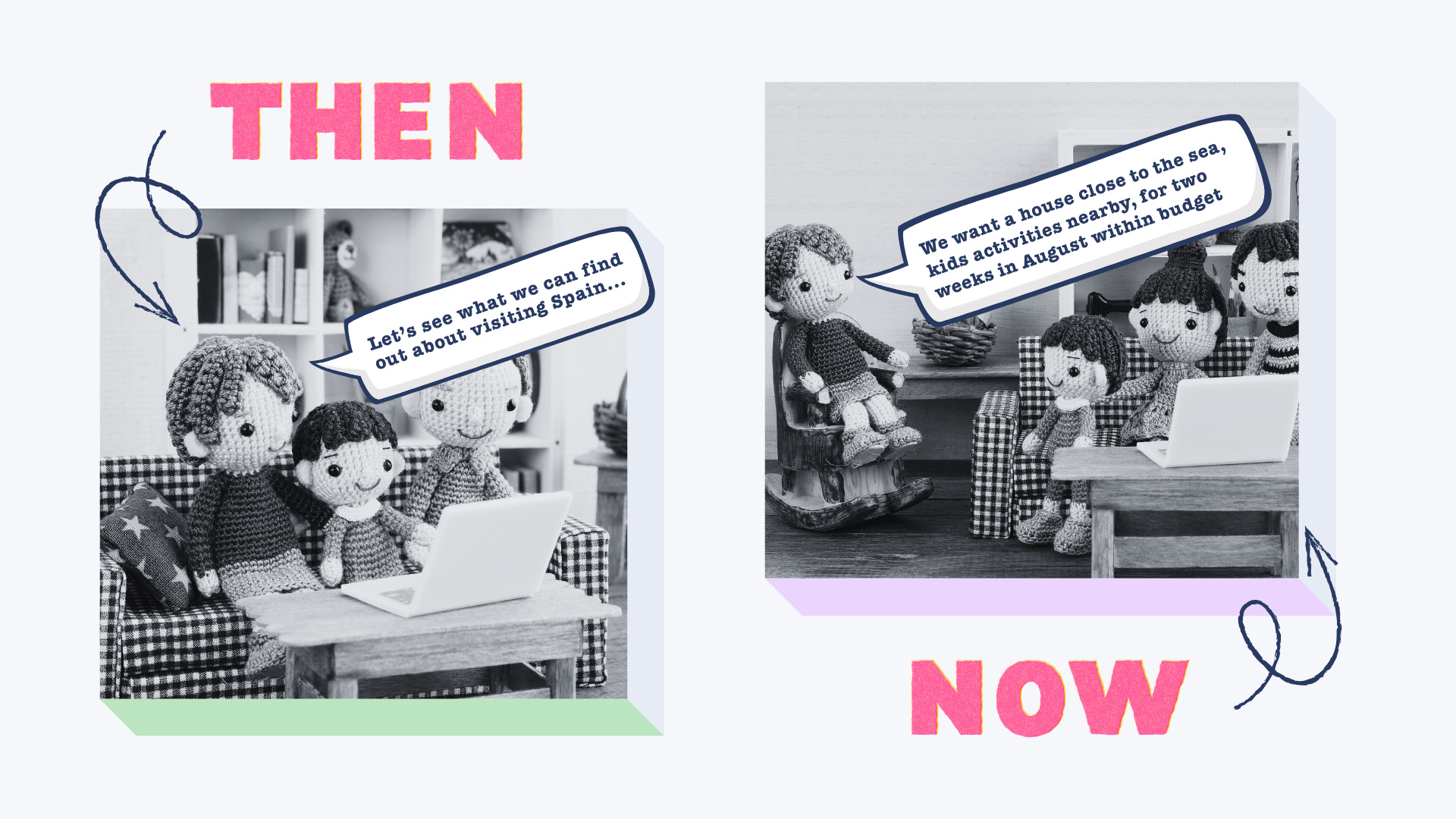
Two unfortunate trends have converged over the past twenty plus years. First, our already declining tendency to ask questions has worsened, driven by the fear of getting it wrong, or worse, facing public humiliation (or “cancellation”) online.
The second is the way we’ve been conditioned to hunt for answers in a sea of content living on the Internet, guided by someone else’s answers rather than our own questions. Instead of intentionally looking for what we need, we passively consume what’s been written.
On the other hand, while generative AI is still limited by its training content, it can process that content far more efficiently and shift the focus from hunting through existing and related content to asking the exact questions we want answered.
Put more simply, rather than being constrained by what someone else chose to write about, why not drive the inquiry ourselves? That is what AI allows us to do…
Why Questions are the Secret to AI’s Usefulness
⓵ You Get to “How To” Faster
Last week, I needed to figure out how to get my family to a London-bound 10 p.m. flight out of Newark Airport from Manhattan on Thanksgiving Eve. I knew it would be crowded, but how crowded and would the lines still be long? What would public transportation be like? Is there decent food available in terminal C?
Sure, I could have tried to piece answers together from a Google search. But it’s an approach focused on sifting through existing answers rather than getting right to my precise needs. Flipping the script can make a big difference.
Instead of passively scrolling through information I didn’t need—like how busy the day before Thanksgiving was nationwide or more general recommendations around timing—I was laser-focused on what I needed to know, and quickly got a granular timeline from ChatGPT.
⓶ You are Better Able to Exploit Opportunities
How many times a day do you NOT ask a question when you could (or should)? Sometimes it’s to spare ourselves the trouble of bothering. Other times it’s just habit or due to fear of asking a “dumb” question. But we rarely consider what is missed by not asking.
For instance, on our return the flight was delayed by four hours. When boarding I was handed a photocopied document with small print and something about “knowing your rights.”
Frankly, pre-generative AI I wouldn’t have bothered reading the paper. But I popped “Regulation 261” into ChatGPT and found that I ultimately was owed financial compensation for the delay. And thanks to my AI interaction, I had the compensation in hand within 24 hours. It would never have happened if I didn’t ask the question.
⓷ It Can Help You Form an Opinion
Over the holidays, I asked friends about how they use AI tools. One response that stood out was using chatbots to explore contentious issues without fear of judgment or social pressure.
How often are we guided by what we consume on social media or watch on TV even if it doesn’t sit with us perfectly? We might have questions but how do we work through them?
But if you could explore issues, particularly divisive ones, and really dig into them, would it change how you see the world?
⓸ It Can Put Health-Related Issues into Context
Hopefully you are beginning to see how much nuance is involved in the use of AI and its impact on your life. Nowhere is this more true than when trying to better understand your health and wellness.
Without a doubt, the sensitivity of health information and the consequences of placing too much trust in a machine make this a delicate area. But there’s real value in thoughtful exploration.
If you think of AI as simply a processor of enormous amounts of information, with outputs based on patterns, you can see the usefulness. For instance, in trying to understand the basic protocols of a health system, or the most common approaches to treatment.
All the things we secretly Google anyway we can now get a clearer, more comprehensive picture. “How do the best hospitals for ___ generally approach treating ___.” When a family member needed care, we wanted to understand NHS treatment protocols and timing, and got a quick response that helped us know what to expect.
The key with health topics is to ask for the broadest perspective possible, or for a set of informed questions to bring to your doctor. The goal here is to give you the tools to ask even more questions and advocate for you or your loved one’s very specific needs.
⓹ It’s an Opportunity to be More Thoughtful
Having a way to “take a beat” can be a surprisingly helpful use of AI. While it might seem like the least important application of the technology, it can represent an opportunity to approach people and situations more thoughtfully.
What does this look like? Well, working through a hard conversation you need to have at work. Or, trying to decide if you are being unreasonable with your partner or kids about where you want to go on vacation.
Maybe how to say “no” to someone, or what’s the best way to help your neighbor. Having a way to practice difficult conversations, deliberate on your approach, or simply work through your thoughts before responding can make a real difference in how interactions unfold.
These are just a few examples, but hopefully you get the gist of it. Technology is a tool, and this new iteration can make us smarter, better informed, and more thoughtful in ways we may not have considered before.
We talk so much about AI as some technology that is separate from us, but it’s just a more advanced way to access the resources we need to be our best selves. It’s not a mystery. It does matter who is creating a model, and it matters even more that we are in control of our information and how the technology is being employed at work, home, or school.
But it’s just a tool. The real conversation should continue to be about who we are and how we want to live, work, learn, and connect with one other. It’s not about the technology—it’s about us as humans, and we need to start thinking differently about our relationship with these tools.