

I Was Bit By a Dog and Turned to AI for Help
The ways we access AI in our day-to-day lives are becoming increasingly routine. And that's a good thing. If we are going to get it right, we must actually use the technology and talk about it.

AI has become the technology we love to hate. The media are endlessly covering the most extreme angles of the AI story and it’s having an impact—we’re worried. But, at the same time, millions (and now billions) of us are using AI. In fact, both ChatGPT and Gemini passed the one billion user milestone in recent weeks.
Of course two things can be true at once: we can feel trepidation about AI while also delighting in what it can do for us. But if we want to have control over the future, and prevent the worst of our dystopian fears from being realized, we need to talk more about AI’s everyday utility. It’s here that we will work through those worrisome kinks that would otherwise lead us down the wrong path.
For instance, last week, I bit by a dog…
Dear Google AI: What to do When a Dog Bites
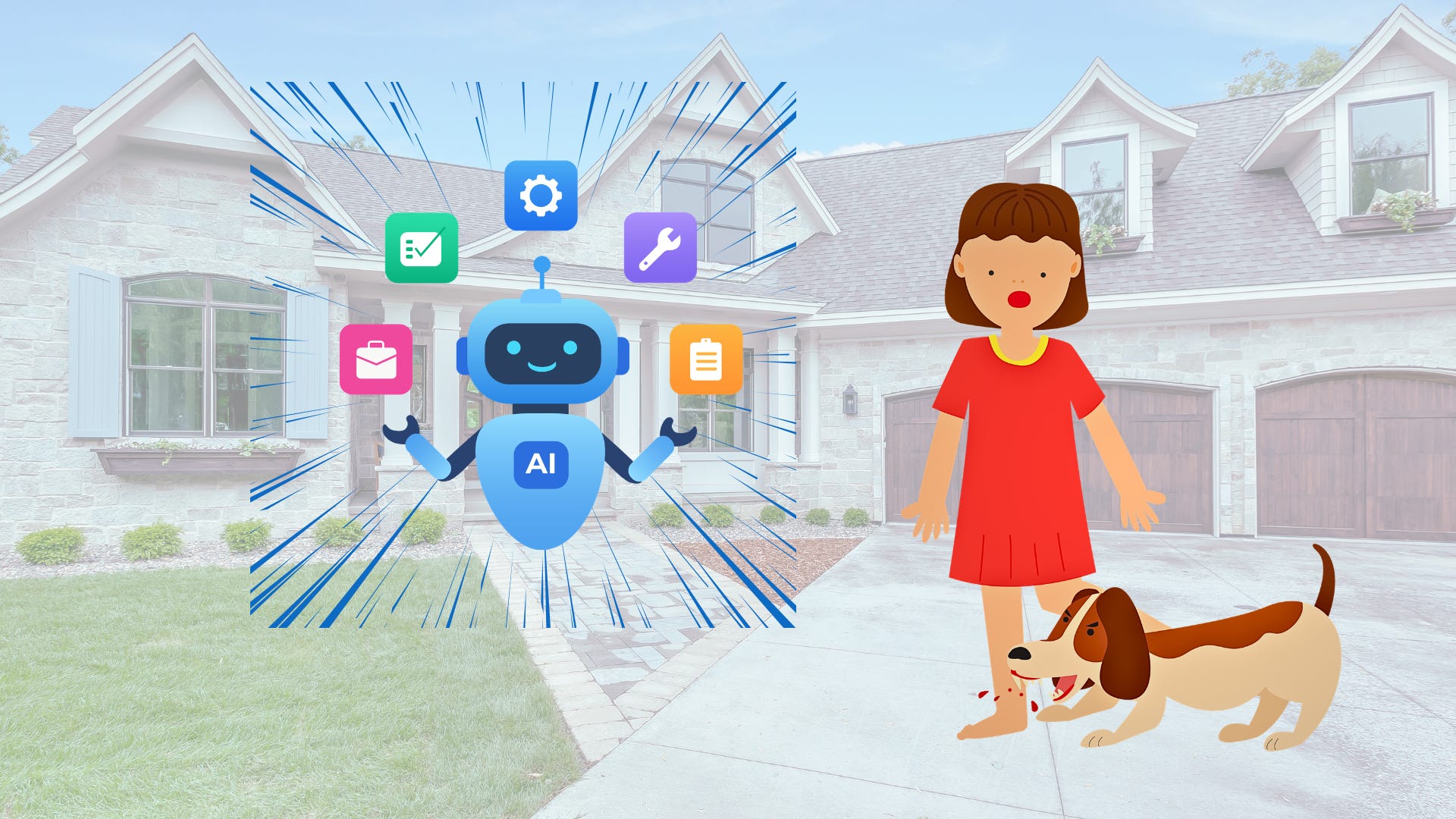
A boring Friday night turned topsy turvy for me last week when I exited the elevator on my floor to find two dogs prone to terrible behavior having a meltdown. Even with two adults in tow, the dogs got loose and attacked my five month old puppy and me. It was bad.
But more importantly, I wasn’t 100% what to do next. A dog bite wasn’t something I had ever considered and, new to my neighborhood, I didn’t even know which hospital was closest. So once I was sure that my puppy was okay, I started in with the questions to ChatGPT:
How long should I be expect to be in the ER? [ChatGPT checked average waiting times for the hospital that I visited and posited what it might look like on a Friday night.]
What would the hospital do for a dog bite and what information should I gather? [ChatGPT suggested that I access the date of my last Tetanus, ensure the offending dog was up-to-date on its rabies vaccinations, and then it prepared me that I would need antibiotics and likely stitches.]
What immediate actions should I take with the building to notify/document the occurrence? [ChatGPT told me I had 24 hours to report the bit to the Department of Health and that I should immediately notify the building and ask that they preserve the video footage.]
In each of these cases I continued to ask questions. I needed information to make smart decisions and this is where AI shines.
I was able in all cases to be cool, calm, and professional in my responses. For instance, the hospital said it was “up to me” whether I had another tetanus (I had one 9 years earlier). ChatGPT noted that CDC guidelines suggested that I should get a booster but that I could wait until Monday and visit my GP for the jab.
I also had to navigate the delicate issue of liability, dog owner interaction, and how to work with the building. ChatGPT advised me on the steps to take, notes to keep, details to jot down, and how to communicate with all parties involved.
More Thoughtful, More Informed
So much of the negative chatter about AI suggests it allows us to offload our thinking and approach the world with intellectual weakness. But what we often miss is how much more empowered we become when we know how to advocate for ourselves.
Consider the nuances and minefield of a dog bite. Just about every person I encountered for the next 48 hours had a story of a similar situation where they felt powerless. Either they were unrealistic about the liability or consequences or they didn’t even bother to report the bite to the health department because they had no idea of city protocol.
What AI can do is help you to slow it down, get the right information, and act in a way that is both thoughtful and ultimately empowering. I’ve shared correspondence from the building for feedback from AI before responding. I’ve also been able to inquire about my care where there were gaps. It’s helped me approach the situation much better than if I was without this AI support.
AI and the Future of Healthcare
This wasn’t the first time I’ve leaned on AI to work through my healthcare needs. In all cases we should be mindful of our health data and privacy (in fact I worry much more about the aging platforms used by some doctors housing sensitive information than AI).
The truth is AI can fill a lot of gaps in our care, and usually those are in areas where we are forced to make decisions ourselves.
For instance, after the bite I had to go to the ER. It was 10 pm, I was bitten by a dog, and the wound required multiple stitches. But ERs prioritize by seriousness and unfortunately on the night I attended it was seven hours before I received care. There were decisions I needed to make and ways in which I needed to advocate for myself that required more information to get right.
For instance, should I worry that six hours into my ER stay my wound hadn’t been cleaned? Is it normal to stitch me up in a waiting area in front of strangers (I guess so! Wow, that was weird). I could go on, but you get my point. There are so many questions I had, none were about offloading decision making to AI, but all affected my sense of control and ultimate wellbeing.
The same has been true time and again for me and my family. After major surgery last year I had a lot of questions about my care that weren’t material to my safety but definitely made an impact on my healing. And it’s becoming one of the main ways I use AI as a result.
How to Use AI Safely
As adults we are always seeking additional information. We ask friends, family, neighbors and even Google for answers. AI is no different. It’s supplemental and can be a game changer in many aspects of our lives if we stay in control.
We are using AI in greater numbers each day and instead of railing against it, we should talk more about how we want to use it. We need to have big ideas that AI helps us work through—not expect that a machine can solve all our problems and absolve us of responsibility.
And when it comes to your data, be smart. On the one hand, I do think that understanding the repetitive nature of the human condition can result in AI curing disease in the future—and that’s exciting. But if you believe certain information could embarrass you, think twice about adding it.
Our Google searches have never been private. Nor is our social media or even our free email accounts. We’ve invited the digital realm into our lives and now we need to understand how to master it to our collective benefit. And this starts with seeing what works, what we like, and helping each other out.