

Why *Critical Ignoring* is an AI Super Skill
Attention is finite, and the people who treat it that way tend to do more with it. In the age of AI, that's no longer just good advice—it's a competitive advantage. Here's why...

This week’s snowstorm gave me an excuse to tackle a reading pile that’s been gathering dust. And as fate would have it, right at the top was an article about the importance of focus, attention, and using our mental capacity wisely.
It’s not a new concept, of course, but it may be the one that most determines how well we adapt to AI, and who is best positioned to thrive in the years ahead.

Information overload and chronic distraction have become afflictions we recognize but rarely take seriously. We often act as if they are personality quirks rather than significant intellectual and societal debts that we’re only beginning to reckon with.
At the same time, we’re quick to blame AI for eroding critical thinking. But AI is a tool; and like any tool, getting the most out of it requires bringing your best self to it. That means showing up with your attention intact, your thinking clear, and your judgment sharp.
Most of us aren’t doing that. In fact, before I even finished writing this piece, a study began recirculating about the impact of short-form video on cognition. It confirmed that social media reels are having exactly the negative effect on our thinking that we fear they are.
Which is precisely what makes learning to strategically ignore the right things so powerful.
Junk Food for the Brain
The importance of protecting ourselves from distraction is far from new. In 1890, psychologist William James wrote that “the art of being wise is the art of knowing what to overlook.” He also argued that “…the faculty of voluntarily bringing back a wandering attention, over and over again, is the very root of judgment, character, and will.”
What’s changed isn’t human nature—it’s the scale of what we’re up against. The volume of distractions competing for our attention has multiplied, and so has the number of people and companies who profit from our fractured focus.
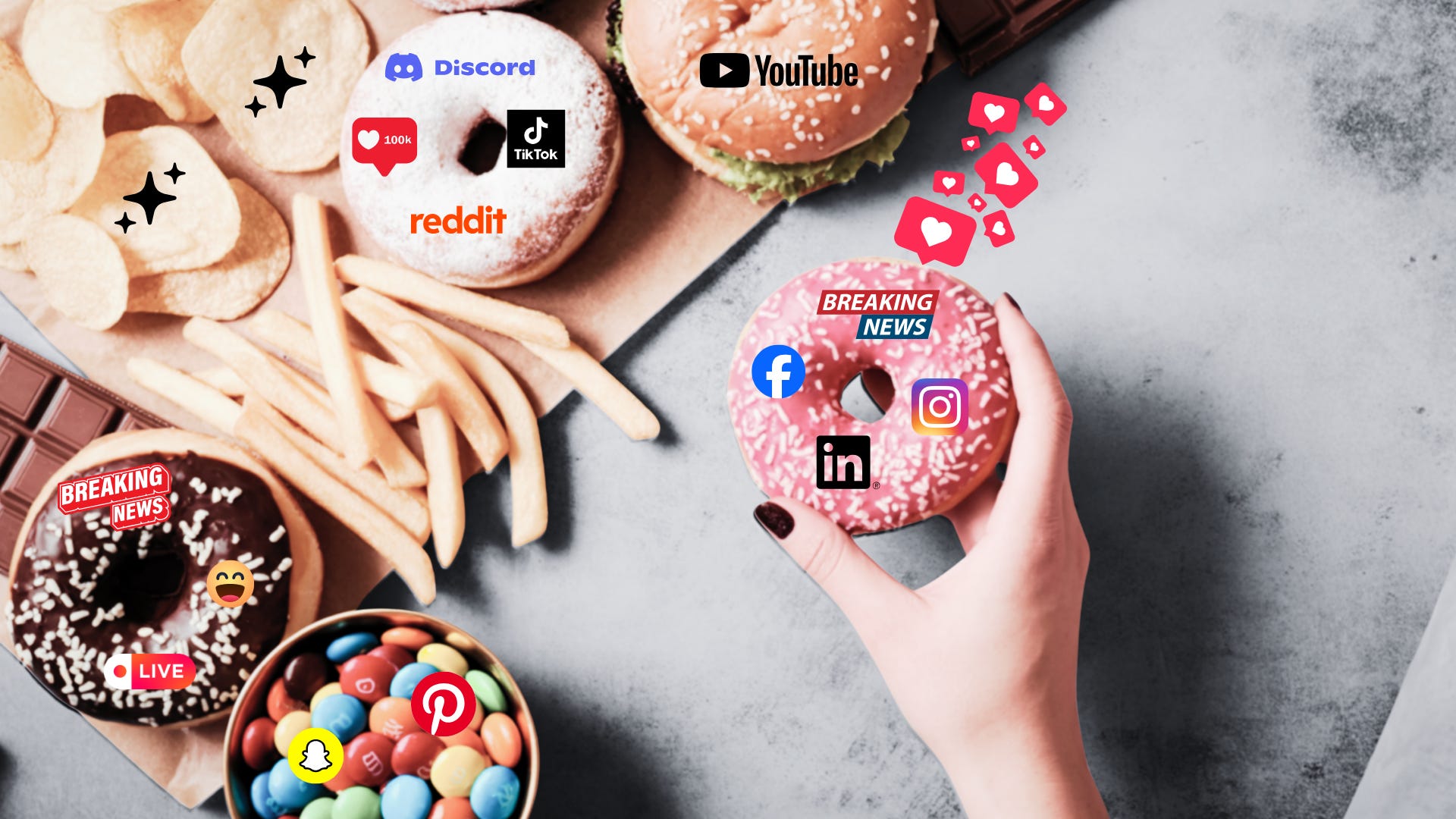
AI has made this significantly worse. For anyone whose livelihood depends on clicks and engagement, it has never been easier and cheaper to flood the digital realm with content designed to grab attention rather than inform.
Digital “slop” (a term I’ve written about previously) is the inevitable result: low-quality, algorithmically-optimized content that functions less like information and more like junk food for the brain. Empty, abundant, and hard to stop consuming…
Surrealism or Spam? How "AI Slop" is Overwhelming the Internet

Have you, or your kids, been scrolling through social media lately only to come across horrifying, can’t-look-away, AI-generated video or image content that seems to be overtaking our accounts?
We only have so much time, energy, and mental capacity available to us on a daily basis and we need to use it wisely.
As noted by the Montreal Ethics Institute: “As AI slop floods digital ecosystems, critical ignoring, choosing what not to engage with, emerges as a missing layer of AI literacy.”
The Power of Strategic Focus
The concept of Critical Ignoring was introduced in a November 2022 paper titled “Critical Ignoring as a Core Competence for Digital Citizens.” Ironically, it was published around the same time ChatGPT launched—ushering in a new era of distraction, and raising the stakes considerably for those who can learn to spend their mental energy wisely.
“Digital literacy and critical thinking should include a focus on the competence of critical ignoring: choosing what to ignore, learning how to resist low-quality and misleading but cognitively attractive information, and deciding where to invest one’s limited attentional capacities.” — “Critical Ignoring as a Core Competence for Digital Citizens,” Current Directions in Psychological Science
The great news is that being more strategic about how we spend our brain power is a relatively straightforward exercise available to all of us.
A few suggestions:
1. Reduce Exposure to Triggers & Distractions
This isn’t about going off the grid. It’s about designing your environment (and your kids’) the way an athlete designs their training. A few places to start:
Delete by intention. Identify the two or three apps you open out of habit rather than purpose and delete them. If you find yourself reaching for them anyway, that reflex alone tells you something.
Try grayscale. A surprisingly effective and underused trick: switching your phone to black and white to remove the visual stimulation that makes apps feel rewarding to open. On iPhone: Settings > Accessibility > Display & Text Size > Color Filters. Toggle on “Color Filters” and select “Grayscale.”
Turn off non-essential notifications. Most notifications exist merely to pull you back into an app. Go app by app in your settings and disable anything that isn’t genuinely time-sensitive. The bar for what counts as essential is probably lower than you think.
Use screen time limits for yourself too. These tools aren’t just for kids. Set hard daily limits on the platforms most likely to pull you into a mindless scroll, and treat the limit as a rule rather than a suggestion.
2. Pause Before Reacting and Sharing
We’ve all been there: you read a headline, your blood pressure spikes, you fire off a text to a friend or reach for the reply button. But headlines are written to trigger exactly that response. Before you invest emotional energy (let alone your reputation) in a story, take sixty seconds to ask a few simple questions:
Who published this, and what’s their incentive?
What’s the primary source?
Is there context I’m missing?
This is an especially worthwhile exercise when a story confirms what you already believe, or when the counter-narrative feels personally uncomfortable. That discomfort is frequently a signal that the information is worth sitting with longer. The flip side of critical ignoring is knowing what deserves your full attention—and content that challenges you almost always does.
This isn’t just a “nice to do.” It’s a foundational thinking skill; and one that will directly shape how well you work with the AI tools that are rapidly becoming part of everyday life.
The people who ask better questions, challenge their assumptions, and resist the pull of the first narrative they encounter are going to get far more out of these technologies than those who don’t. Critical thinking isn’t becoming less relevant in an AI-driven world. It’s becoming the thing that matters most.
3. Understand the Business Model (and Your Role in It)
Engagement is the currency of the attention economy. Every like, share, comment, and outraged reply is a transaction—and the profit flowing to these companies comes directly at the expense of our time, our focus, and increasingly, our wellbeing.
Social media interaction can feel empowering; like you’re part of a conversation that matters. But the architecture of these platforms is specifically designed to make you feel that way while your attention is simultaneously harvested for advertising revenue and algorithmic reach. The feeling of participation is the product.
The practical implication is simple: before you engage, ask who benefits. The answer is almost never you.
But here’s what’s easy to forget in all of this—we are not powerless. In fact, the opposite is true. Every personal, individual, incremental decision we make about where to direct our attention is an act of agency.
Taken alone, these choices quietly reshape our own lives. Taken together, they have the power to change the economics, the incentives, and ultimately the culture that shaped them in the first place. That’s not a small thing. That’s how the future gets written…
Have you grabbed your copy of AI for Families yet? If not, you are in luck, I’m now able to offer a discount for subscribers! Click here for a subscriber-only link.
Ooh, love the grayscale idea! Thank you!